Standard, Regular Bread
This bread is as basic as you are.
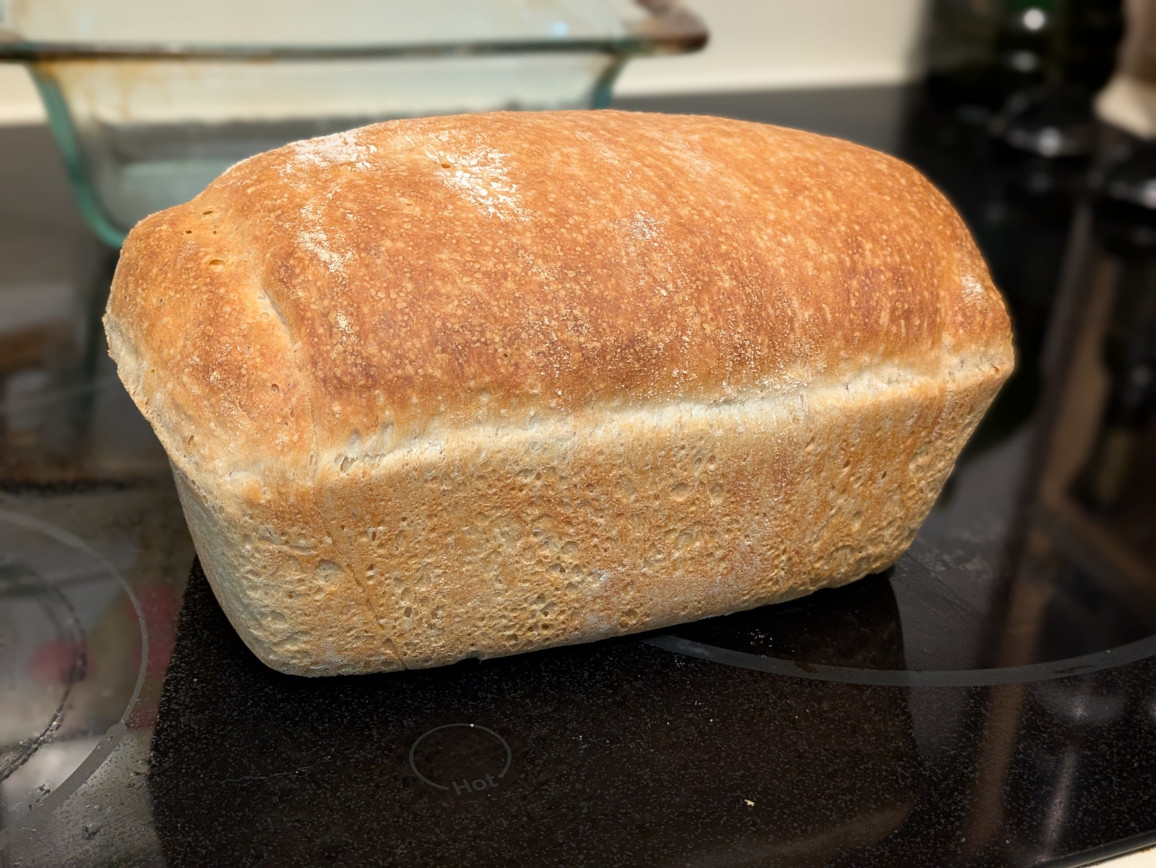
Ingredients
Metric
| Amount | Unit | Item |
|---|---|---|
| 500 | grams | flour (AP or Bread, your choice) |
| 8 | grams | salt |
| 20 | grams | yeast |
| 100 | grams | butter (1 Stick) |
| 300 - 350 | ml (grams) | water |
Instructions
- Place a bowl on your scale and tare it.
- Add 500g of flour to your bowl then tare the scale.
- Make a "valley" in the middle of your flour. This will hold the butter and water.
- Add your salt on one side of your valley then tare the scale.
- Add your yeast on the other side of the valley and tare the scale. (The salt and yeast must not touch!)
- Put your butter in the valley and tare the scale.
- Add your water.
- Place the bowl under your stand mixer and mix with the dough hook until the dough starts to pull the flour and ingredients from the sides of the bowl.
- Flour your counter or work space liberally and dump the dough onto it.
- Knead the dough. The dough should feel like play dough and not be sticky. Keep adding sprinkles of flour until the dough is no longer sticky if it is.
- Place the dough in a well greased bowl and let it stand in a warm, draft free place for about one hour.
- After the first prove has been completed, dust your workspace with flour liberally and dump out your dough.
- Give it a gentle knead the bread. (Just a little. It is important not to overwork it.)
- With a rolling pin, roll your dough out into a sheet.
- Roll the dough up into a sprial as tightly as possible.
- Take your bread roll and place it in a well greased bread tin.
- Cover and prove for an additional hour.
- Preheat your oven to 450°.
- Bake for approximately 24 minutes.
- Remove from the oven and dump your loaf out of its tin.
- Allow the bread to cool thoroughly before cutting into it.
Notes
Make sure not to let the yeast touch the salt when putting the ingredients in your bowl, otherwise it will kill the yeast and you won't get a good rise.
Your oven can be used as a proving drawer if you don't have a good place to do it.
You may need to adjust the amount of water based on the type of flour. The more "wheatie" the flour the more water you may need to add; The wheat will suck it up.